



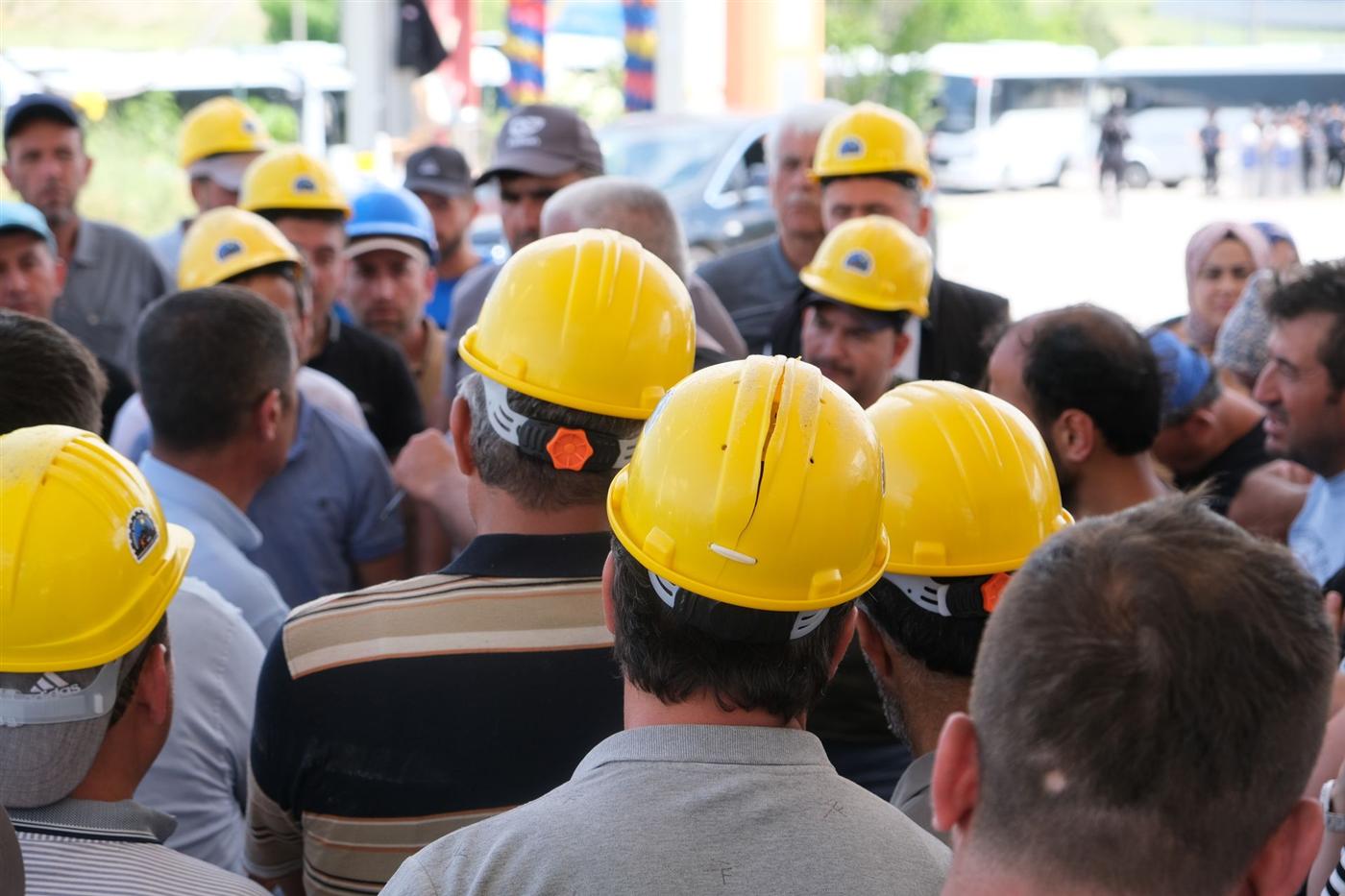
The people boards rely on when the date matters.
When an owner has announced an opening date to a city, a lender or a hospital board, someone has to know whether it will hold. At RichardBarkley, that someone is you: the planner who reads the critical path first, the cost engineer whose forecast survives scrutiny, the analyst whose findings close the argument.
Most firms ask planners to produce reports. We ask them to give clients command. That means a baseline you would defend under oath, an update that tells the truth on the data date, and the composure to say the date is at risk while there is still time to act. If that is the standard you already hold yourself to, you will find colleagues here who hold it too.
A firm built to sharpen your judgement.
Scale is easy to find. What is rare is senior attention, real accountability early, and work that is read by executives, lenders and tribunals. That is what we offer.
Work with consequence
Hospitals, airports, water systems, data centers and plants that people depend on. Your analysis shapes decisions on capital that cannot afford to be wrong.
Principals who teach
You learn the craft beside senior schedulers, cost engineers and forensic analysts on live engagements, with a named mentor from the start.
Accountability, early
Own deliverables, sit in client reviews and be expected to raise your hand the moment the logic does not hold.
Credentials, encouraged
We back preparation for credentials such as PMI-SP, AACE PSP and CCP, coached by colleagues who have already sat the exams.
The Barkley Institute
Our own people come first at the Institute: Primavera P6, project controls, delay analysis and executive workshops, taught by practitioners.
Room to range
Planning, controls, advisory, forensics, analytics and teaching. Build depth in one discipline and range across the others in a single career.
Where your craft fits here.
Six paths, one standard: decision-grade work that a client can defend. Choose the one that sounds most like you, then see the roles.
Planning & Scheduling
CPM baselines, integrated master schedules and recovery plans in Primavera P6. The core of how we give clients command.
Roles PATH 02Cost & Project Controls
Earned value, cost-to-complete, change control and executive reporting that boards act on.
Roles PATH 03Forensic Delay & Claims
Reconstruct what happened, when and why. Time impact analysis and expert support that holds before counsel and tribunals.
Roles PATH 04Owner's Advisory & Assurance
Sit on the owner's side of the table: independent schedule reviews, readiness assessments and governance.
Roles PATH 05Controls Intelligence
Power BI, predictive analytics and portfolio views that turn the data date into earlier decisions.
Roles PATH 06Early Careers
The Barkley Fellowship and summer internships: a structured start, rotations and real client work.
ProgramsA career with clear milestones.
We plan careers the way we plan programs: defined milestones, candid reviews and a mentor who helps you reach the next one. A typical planning path looks like this.

Begin where the decisions are made.
The Barkley Fellowship is a two-year rotation across our practices, with a mentor throughout and client work from the first month. It is designed to turn able engineers and builders into the planners and analysts owners ask for by name.
- Rotations through planning, cost and project controls, and a specialism of your choice
- Primavera P6 and credential preparation through the Barkley Institute
- A capstone presented to firm principals
Exacting standards. Generous colleagues.
Five standards shape how we work and how we treat each other: Candour, Rigour, Independence, Composure and Stewardship. They are the reason difficult engagements feel steady from the inside, and why people here cover for one another when a site calls late.
Life at RichardBarkley
Five steps. Always a reply.
We treat your time as carefully as a client's. At every stage you will know where you stand and what comes next.
Introduce yourself
Email your resume to hello@richardbarkley.com with a few lines on the work you do best. A person reads every one.
First conversation
An unhurried call about your experience, your ambitions and the kind of work you want next.
Practitioner session
Work through a realistic scheduling, cost or delay scenario with the people you would join. No trick questions.
Meet a principal
A candid conversation on standards, expectations and where your career could go with us.
Offer & first 90 days
A clear offer, a mentor named before you start and a plan for your first ninety days.
What candidates ask first.
Direct answers. If yours is not here, write to hello@richardbarkley.com.
Do I need Primavera P6 experience to apply?
For experienced roles, yes, or deep command of a comparable CPM tool. For the Fellowship and internships, no. The Barkley Institute teaches P6 from first principles, and some of our strongest planners learned it here.
Which backgrounds do you hire from?
Construction management, civil, mechanical, electrical and industrial engineering, quantity surveying, architecture and related fields. We also value career changers who bring field experience and an analytical mind.
Will I work remotely or on site?
It depends on the role and the engagement. Much of the analysis can be done away from site, while progress walks and client reviews often need you there. We set out expectations clearly before any offer.
How do you support professional credentials?
We encourage preparation for credentials such as PMI-SP, AACE PSP and CCP, with coaching from colleagues and access to Barkley Institute courses.
How does progression work?
Defined stages from analyst to principal, regular progress conversations and a mentor who helps you plan your next milestone. We promote on capability and judgement, not tenure.

Do the work you will be known for.
No role that quite fits? Write to hello@richardbarkley.com with your resume and a few lines on the work you do best. A principal reads every note.